Words & early reading
First words through picture books: point, name and play
By Uncle Snail Storybooks · 4 min read
Updated
A book about hands can lead to a wave. A picture of a digger can lead to a scoop. When a word has something to do, it becomes part of the shared moment instead of a label you are asking a child to remember.
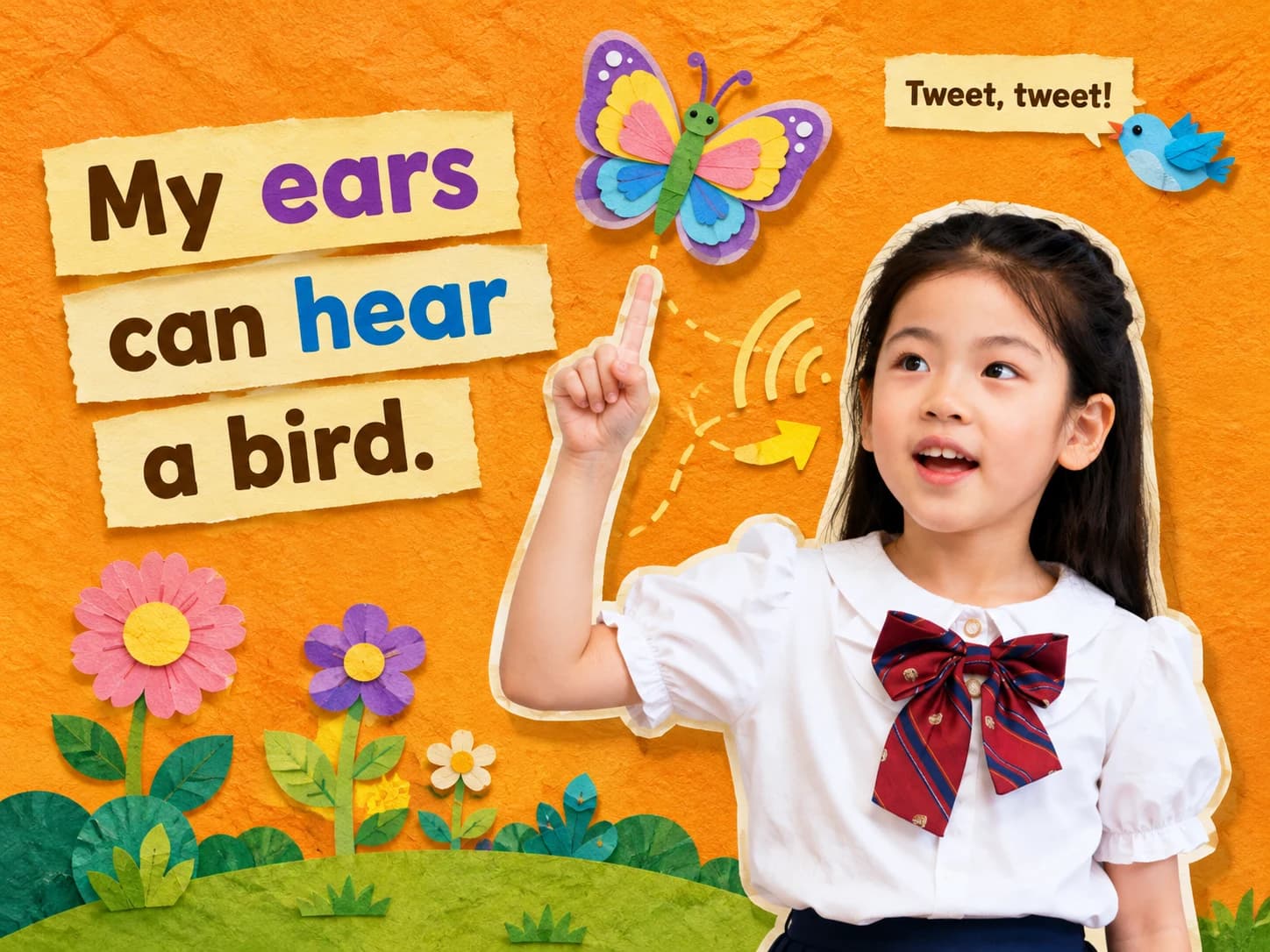
Choose words with something nearby to show
Start with a page you can connect to the room: a hand, a toy, a foot or a door. You do not need a word list for the entire book. Choose two or three words you are likely to use while getting dressed, playing or tidying up.
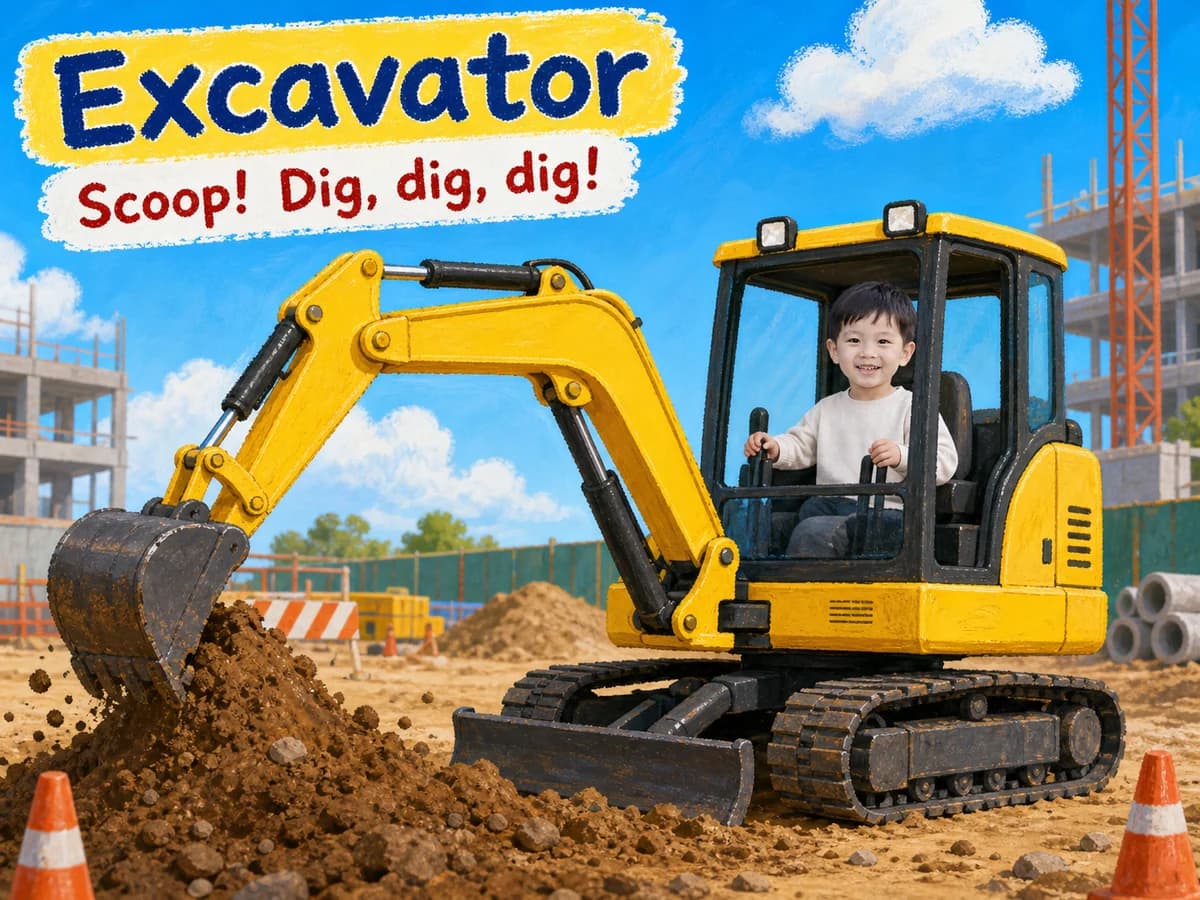
Body words are convenient because the picture and the real thing can be close together. A vehicle story offers a different route: scoop, lift and push can become small actions with a large toy or a rolled-up sock. Pick the page that interests your child that day.
Add a little to what your child notices
The American Academy of Pediatrics suggests building a conversation from a word a child has just used, then leaving time for another response. You can do this while looking at a picture rather than asking a series of naming questions.
For example, if your child points at a hand, you might say, “A hand. The hand is waving.” Then give a small wave of your own. If they tap the picture instead of speaking, acknowledge what they have noticed and continue. The exchange need not have a spoken answer every time.
Further reading: American Academy of Pediatrics: How to Share Books with Children 2 and 3 Years Old.
Give one word an action
Choose an action that is comfortable for your child. A wave, a small point or a gentle movement of a toy may be enough. You can move the toy yourself and let your child direct you with a look or gesture. Adapt the game to what they enjoy doing.
Keep the action connected to the meaning. If the word is “lift”, lift the toy a little. If it is “stop”, let it become still. You are making a tiny scene, so a silly voice or an unexpected pause is welcome when your child enjoys it.
Find the word away from the book
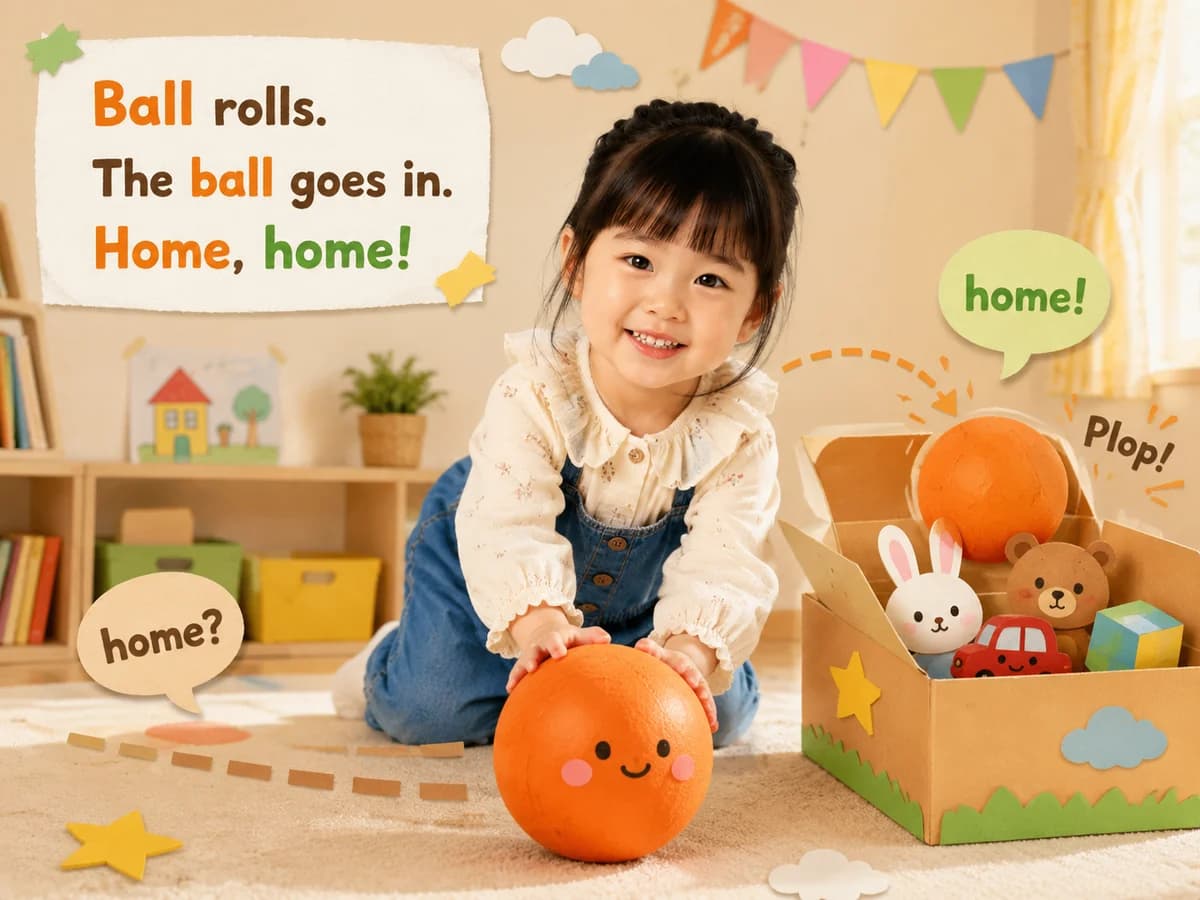
After closing the book, look for one natural place to use the same word. A hand appears again while putting on a sleeve. A toy needs a home when play ends. Make the connection in a sentence and carry on with what you were already doing.
If you want a small card, draw the object on paper and add its word underneath. Use it to match a picture to an object, rather than expecting your child to decode the writing. Homemade cards are enough; you do not need a complete printable pack to begin.
Leave space for your child’s version
Your carefully chosen action might turn into a story about a toy that refuses to go home. That gives you a different conversation to share. You can repeat a useful word naturally inside the new story without bringing everything back to your original plan.
In multilingual families, talk about the pictures in the language you use comfortably together. These ideas are invitations for shared reading, not a vocabulary test or a timetable for when a child should say particular words.
A few practical questions
- Should I ask my child to repeat every new word?
- No. Say a word naturally and leave a pause. Looking, pointing, acting or listening can all be ways to take part in the activity.
- Do I need printed word cards?
- No. The book, a familiar object or a quick drawing on paper is enough. Cards are one optional way to revisit the words.
For another way to enjoy the story, explore the related Activity Kit ideas. Before uploading a photo, read how we handle your child’s photo.
Stories to explore together
See your child in four stories.
Choose four stories and preview four pages from each with one photo. One trial round per account. No card needed.
Try four stories free →