Read, play & make
Five easy picture-book activities to try at home
By Uncle Snail Storybooks · 4 min read
Updated
The last page does not have to be the end of the game. A book can become a small building site, a pair of story cards or a new home for a toy. Choose one activity below and leave the others for another day.
1. Draw a beginning and an ending
Fold a sheet of paper to make two drawing spaces. On one side, sketch something that happens near the start of the story; on the other, sketch what happens later. Simple marks with spoken explanations are fine. Place the pictures side by side and tell the short version together.
For a child who wants more, add a middle picture. Then deliberately put one picture in an unexpected place and invent the story that would follow. A familiar sequence and an invented sequence can both be interesting to talk about.
2. Match a picture to something in the room
Choose three easy-to-find objects or actions from the book. Find a large toy, an item of clothing or another familiar object that connects to a picture. Place each object near the matching page, or draw small reference pictures on one sheet of paper.
You can accept an imaginative match. A cushion can stand for a mountain; a cardboard box can become a truck. Ask your child to show you the connection. You are making a bridge into play, not checking whether they own exactly the object in the illustration.
3. Build one scene with a box
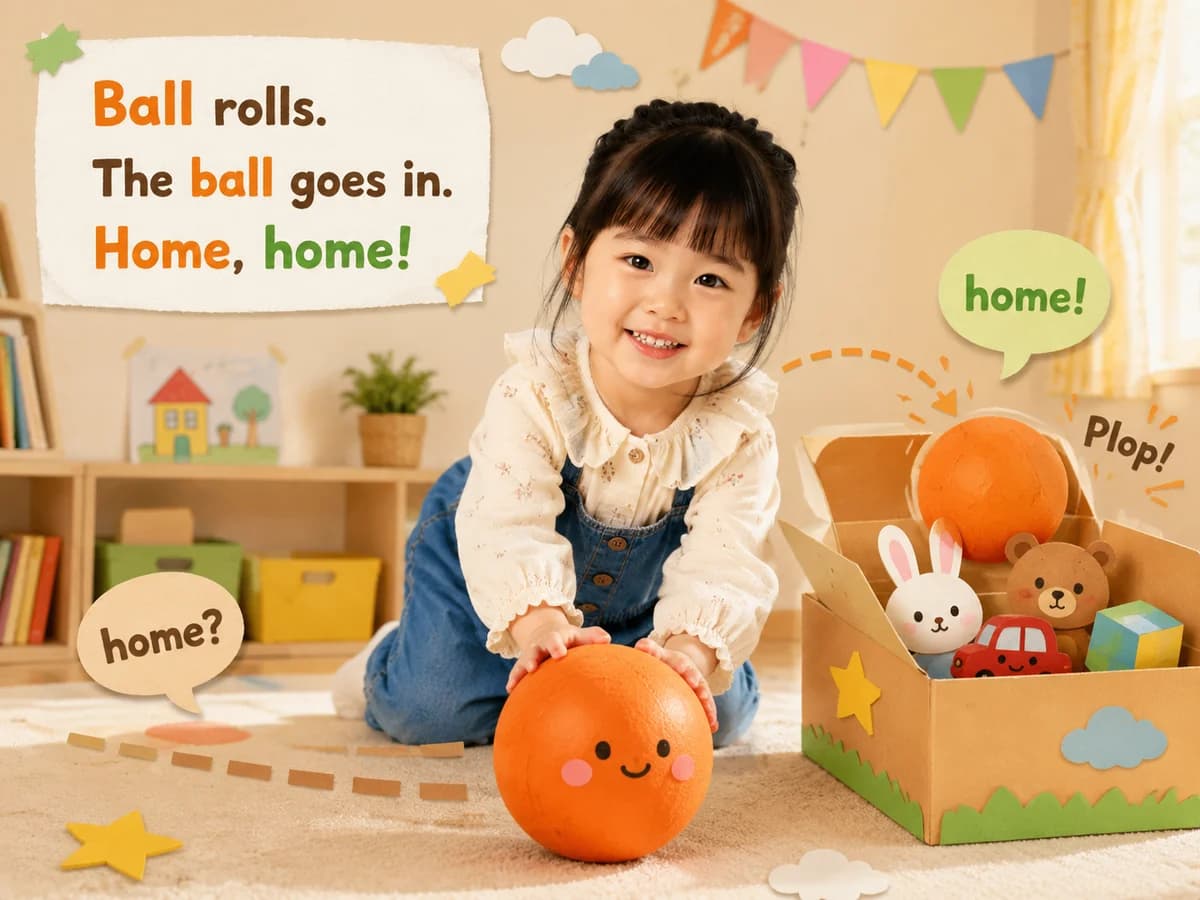
Open a clean cardboard box into a simple play space. Draw a road, a garden path or a room on the base. Add a familiar toy and let the child choose what the scene needs next. For a construction story, a folded piece of card could become a ramp.
An adult should handle cutting thick cardboard and remove staples or sharp edges. Choose large materials if small pieces are not suitable for your child, and keep the making session supervised. A drawn doorway works just as well as a cut-out one.
4. Give a toy one line to say
Choose a soft toy as the storyteller. Give it a question, an instruction or an invented complaint from the world of the book: perhaps it cannot find its parking space. Your child can answer as another character, move the toy or tell you what to say next.
There is no need to memorise the printed lines. A one-sentence retelling may be plenty, especially if your child immediately starts a different adventure. Let the toy take that detour and return to the book when you want another idea.
5. Add one more page
Ask where the character goes after the book ends. Your child might draw a snack, a trip outside or a place to sleep. Offer to write their exact words under the picture, including the surprising or funny parts. Put the paper beside the original book when you read again.
These homemade activities need no purchase or file download. If you explore a Story Activity Kit, check the selected title for the materials currently available. This guide offers ideas you can make yourself; it does not promise that every book has a downloadable version of each activity.
A few practical questions
- Do we need to do all five activities?
- No. Pick the one that suits the materials, time and interest you have today. You can stop while there is still more to try another day.
- What if my child wants to change the story?
- Use that as the starting point for an extra page or a new scene. Keep the original book nearby if you want to compare the two versions.
For another way to enjoy the story, explore the related Activity Kit ideas. Before uploading a photo, read how we handle your child’s photo.
Stories to explore together
See your child in four stories.
Choose four stories and preview four pages from each with one photo. One trial round per account. No card needed.
Try four stories free →